
Industrial Labour Supply: How It Works
Published on
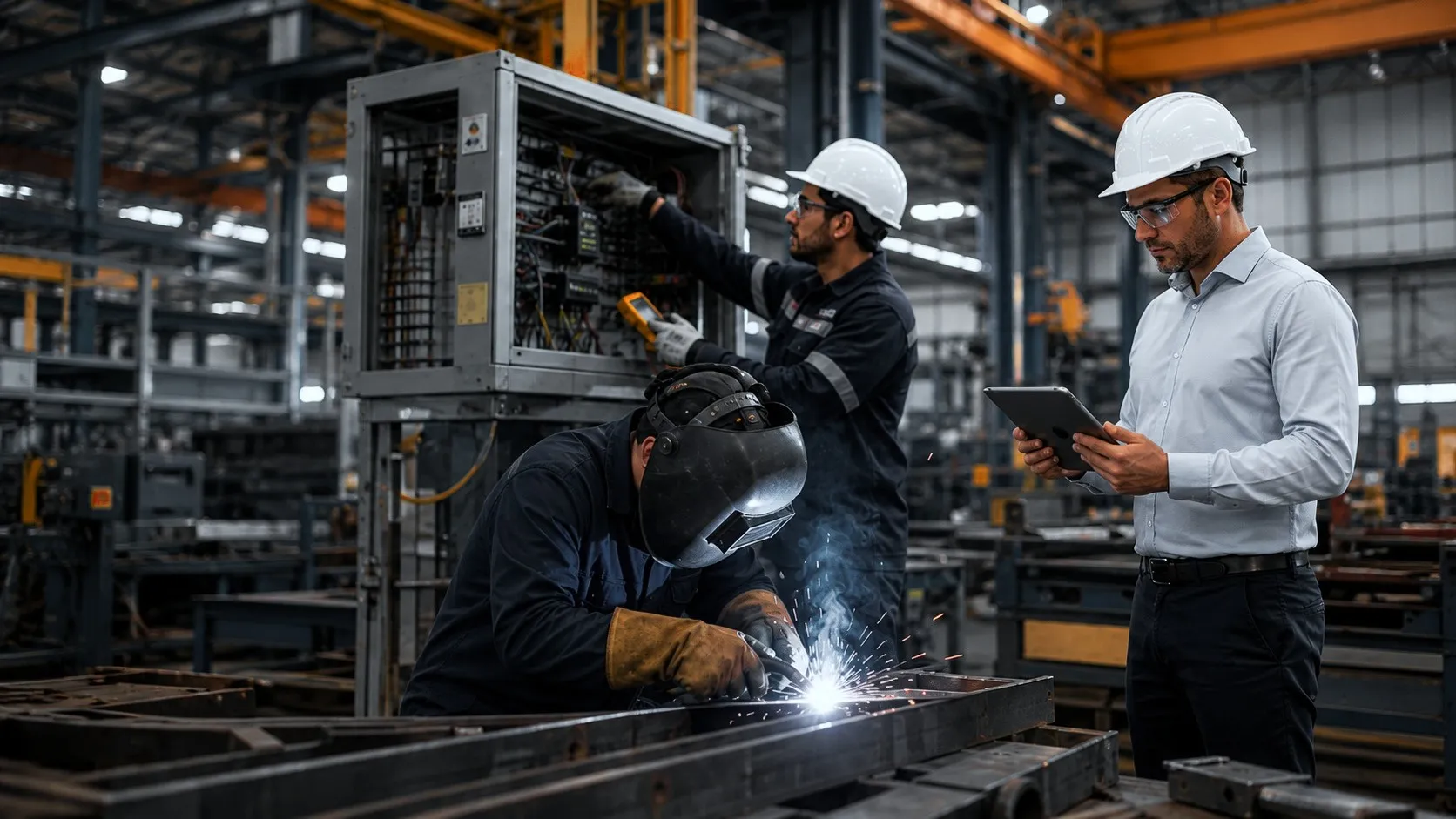
Industrial labour supply means bringing skilled tradespeople, such as welders, pipe fitters, boilermakers and maintenance technicians, into a plant for the length of a job. It is how a plant covers a shutdown, a project or a gap in its own team without taking on permanent staff. This article explains how it works, when it makes sense and what to settle before the first person walks onto site.
What industrial labour supply is
A plant has its own team to run and maintain it. Some work does not fit that team: a shutdown with a fixed window, a new line to install, a vessel to repair, a few weeks of TIG welding on stainless pipework. Labour supply fills that gap with people who already have the trade.
It is not the same as a general recruitment agency. A welder is not just a welder: the work calls for a particular process, material, thickness and position, and a qualification that covers them. The person who arrives has to be able to do the job in front of them from the first day.
Two ways to bring people in
There are two ways to do it, and they suit different situations.
- People on your site. Welders or technicians work in your plant for as long as the job lasts, under your site rules, on the tasks you assign. This suits you when you know what has to be done and have supervisors to direct it.
- Work to order. You define the result, whether a vessel, a pipe run or a steel structure, and the contractor takes the job on, with its own people directing the work. This suits you when you would rather buy the result than manage a crew.
We offer both. You can see how it works for each trade on the welding contractors page.
Which trades are usually supplied
- Welders in TIG, MIG and manual metal arc, in carbon steel, stainless steel, aluminium or titanium
- Boilermakers and platers, for vessels, tanks and plate work
- Pipe fitters and pipe welders, for industrial pipework
- Mechanical fitters and erectors, for equipment and steelwork
- Maintenance technicians, for keeping the plant running
When labour supply makes sense
- A shutdown, also called a turnaround: a planned stop with a fixed window, when you need more people than you employ
- A project with a start date and an end date
- A peak in workload that your team cannot absorb
- A skill you only need now and then, such as stainless steel pipe welding
- Cover for absence
If the work is continuous and permanent, hiring your own staff is usually the better answer.
What to settle before anyone starts
Most problems with labour supply come from details that nobody wrote down. Agree these before the first day.
- The profile. Trade, process, material, thickness, and the standard the work follows.
- The qualifications. A welder’s certificate is personal and covers a process, a material, a thickness range and a position. Ask for it in the welder’s name and check that it covers your job.
- Dates and duration. When it starts, how long it lasts, and what happens if the job runs over.
- Who directs the work. Your supervisor, or the contractor’s.
- Who the employer is. In Spain, the temporary hiring of workers in order to hand them over to another company is restricted to authorised temporary employment agencies. A contractor that takes on a job and directs its own staff is a different arrangement. Ask which one you are dealing with.
- Site requirements. Induction, safety documentation and the paperwork your plant asks of outside companies.
What we need to quote
Tell us what the job is, which profiles and how many people, the dates and where the plant is. We will reply with a proposal. You can contact us by phone, email or the form.